
Introduction
Real How to Invest in REITs provide an excellent opportunity for beginners to invest in real estate without having to buy or manage physical properties. As a beginner, REITs offer a way to earn exposure to the real estate market, receive regular income through dividends, and enjoy diversification within your portfolio—all without the complexities of traditional real estate investing. In this article, we’ll walk you through what REITs are, how they work, the types of REITs available in 2025, and how to get started as a beginner. Whether you’re looking for a steady income stream or long-term growth, REITs can be a valuable addition to your investment strategy.
What Are REITs and How Do They Work?
Practical Tip: REITs allow you to invest in real estate without buying physical properties. They pool investors’ money to own or finance real estate projects, such as shopping malls, office buildings, or apartment complexes.
Real-World Example: John wanted to invest in real estate but didn’t have enough capital to buy property. In 2023, he started investing in Vanguard Real Estate ETF (VNQ), which gave him exposure to real estate markets with low fees.
Pro-Tip: REITs are an excellent option if you want to earn income through dividends and gain exposure to the real estate sector without the need for property management.
Types of REITs You Should Know About
Equity REITs
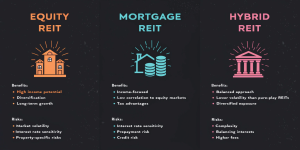
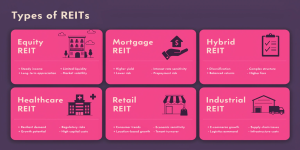
What they are: Equity REITs invest in physical real estate and earn revenue from renting out properties. These are the most common type of REITs.
Why it’s a great pick: Equity REITs provide regular dividend income from rent payments and potential capital appreciation as property values rise.
Real-World Example: The Realty Income Corporation (O) is an equity REIT known for its consistent monthly dividend payouts, making it a popular choice for income-focused investors.
Mortgage REITs (mREITs)
What they are: Mortgage REITs invest in mortgage loans and earn income through the interest on these loans.
Why it’s a great pick: mREITs typically offer higher yields than equity REITs but come with more risk, as they are more sensitive to interest rates.
Pro-Tip: Consider mortgage REITs if you’re looking for higher dividend yields, but understand that these are more volatile than equity REITs.
Hybrid REITs
What they are: Hybrid REITs combine both equity and mortgage REIT strategies, investing in both physical properties and mortgage loans.
Why it’s a great pick: Hybrid REITs offer a mix of capital appreciation and income generation from both property investments and mortgage interest.
Pro-Tip: Hybrid REITs can be a good option for investors looking for a balanced approach to real estate investing.
How to Choose the Right REIT for Long-Term Investment
Practical Tip: When choosing a REIT to invest in, consider factors such as the type of properties the REIT holds, the dividend yield, the expense ratio, and its historical performance.
Look at the REIT’s Property Portfolio
Why it matters: The types of properties a REIT owns will affect its income potential. Retail, office, industrial, and residential properties can all provide different levels of stability and growth potential.
Pro-Tip: If you’re new to REITs, consider diversified REITs that invest across multiple property types to reduce risk.
Examine the Dividend Yield
Why it matters: REITs are required by law to pay out at least 90% of their taxable income as dividends. The dividend yield can be a great indicator of a REIT’s income potential.
Pro-Tip: Be cautious of REITs with very high dividend yields—they could be taking on too much risk to sustain those payouts.
Check the Expense Ratio
Why it matters: The lower the expense ratio, the more of your investment goes toward generating income and capital gains. Look for REITs with expense ratios under 0.5%.
Actionable Tip: Always compare expense ratios when selecting between REIT ETFs or mutual funds.
Common Mistakes Beginners Make When Investing in REITs
Mistake: Not understanding the risks of mREITs
Fix: Mortgage REITs tend to be more volatile and sensitive to interest rate changes. If you’re new to REITs, stick with equity REITs for more stability.
Mistake: Ignoring the tax implications
Fix: REITs typically distribute a large portion of their income as dividends, which are taxed at a higher rate than qualified dividends. Make sure to factor this into your tax planning.
Mistake: Over-relying on dividends for income
Fix: While dividends are an important benefit of investing in REITs, don’t overlook the potential for capital appreciation. Look for REITs with a balanced approach to income and growth.
Information Gain – The Role of REIT ETFs in 2025
In 2025, REIT ETFs have become increasingly popular as they allow investors to gain exposure to a diversified basket of REITs, without the need to select individual stocks. REIT ETFs are a great option for beginners as they provide instant diversification across multiple properties and sectors, all while maintaining low fees.
Pro-Tip: Consider investing in REIT ETFs like Vanguard Real Estate ETF (VNQ) or Schwab U.S. REIT ETF (SCHH) for broad exposure and cost efficiency.
Unique Section: Beginner Mistake Most People Make – Not Rebalancing Their REIT Portfolio
One common mistake beginners make when investing in REITs is neglecting to rebalance their portfolio. As certain sectors perform better than others, your REIT holdings can become too heavily weighted in one area. For example, if office REITs perform poorly, you may end up with a concentrated exposure to that sector. Regular rebalancing ensures that you maintain the right mix of REITs to balance risk and reward.
Pro-Tip: Set up a yearly rebalancing strategy to ensure your REIT portfolio stays aligned with your long-term investment goals.
FAQ Section (5–7 Questions)
What is a REIT and how does it work?
A REIT is a company that owns income-generating real estate and pays investors dividends from rental income or profits.
What are the benefits of investing in REITs for beginners?
Provides easy real estate exposure, diversification, and regular dividend income with low capital.
How much should I invest in REITs as a beginner?
Start small, even with a few hundred dollars, and increase gradually as you gain confidence.
What is the best type of REIT for long-term investment?
Diversified or equity REITs with stable, income-generating properties.
Are REITs a safe investment?
Generally lower risk than direct property, but still subject to market and interest rate fluctuations.
How can I invest in REITs without buying property?
Buy shares of publicly traded REITs through a brokerage account.
What are the risks of investing in REITs?
Market volatility, interest rate sensitivity, property value declines, and management issues.
Conclusion
REITs provide an accessible way for beginners to invest in real estate without the complexities of direct property ownership. Whether you choose equity REITs, mortgage REITs, or REIT ETFs, each option offers unique benefits for long-term investors looking to build wealth through real estate. By choosing wisely, staying diversified, and rebalancing your portfolio, you can successfully add REITs to your investment strategy in 2025 and beyond.
Internal & External Links
Internal Link: How to Build a Diversified Investment Portfolio
External Link: Investopedia’s Guide to REITs