Introduction
Exchange-Traded Funds (ETFs) have quickly become one of the most popular investment vehicles for beginners in 2025. They provide easy access to a diversified portfolio without the complexity of buying individual stocks. But with so many ETFs out there, how do you choose the right one for your goals? In this guide, we’ll break down the key factors to consider when Choose Your First ETF, from understanding the different types to selecting the best fit for your investment strategy. Whether you’re looking for broad market exposure or a niche sector, this guide will provide the clarity you need to make an informed decision.
What Are ETFs and How Do They Work?
Practical Tip: ETFs combine the best of both stocks and mutual funds. They’re traded like stocks, but they provide diversification similar to mutual funds, often with lower fees.Real-World Example: Matt started investing in ETFs in 2024 by purchasing a Total Stock Market ETF. By 2025, he had exposure to a broad range of companies, minimizing the risk compared to investing in individual stocks.Pro-Tip: Look for ETFs with low expense ratios to ensure more of your money is working for you over time.
Types of ETFs You Should Know About
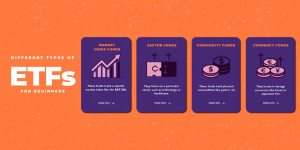
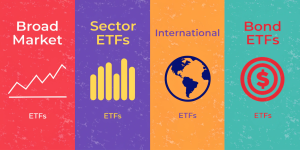
Broad Market ETFsExample: Vanguard S&P 500 ETF tracks the performance of the S&P 500, providing exposure to 500 large-cap U.S. companies.Pro-Tip: Broad market ETFs are ideal for beginners because they offer instant diversification.Sector-Specific ETFsExample: Technology ETF focuses on companies in the tech sector, such as Apple, Microsoft, and Google.Pro-Tip: Sector ETFs are great if you want to invest in a growing sector but don’t want to pick individual stocks.International ETFsExample: iShares MSCI Emerging Markets ETF provides exposure to emerging markets outside the U.S., such as China, Brazil, and India.Pro-Tip: If you’re interested in global investing, international ETFs can help you diversify into non-U.S. markets.Bond ETFsExample: iShares Core U.S. Aggregate Bond ETF offers exposure to a diversified range of bonds.Pro-Tip: Bond ETFs are lower risk than stock-based ETFs, making them an excellent choice for income-focused investors.
Key Factors to Consider When Choosing Your First ETF
Practical Tip: Before buying an ETF, evaluate its expense ratio, performance history, and underlying assets to ensure it fits your investment goals.Expense RatioWhy it matters: A lower expense ratio means more of your investment goes toward building wealth instead of paying fees.Pro-Tip: Look for ETFs with expense ratios below 0.1% to maximize long-term returns.Performance HistoryActionable Tip: Look at the ETF’s performance over the past 3–5 years, but keep in mind that past performance does not guarantee future results.Underlying HoldingsPro-Tip: Check what assets are held within the ETF. For example, a tech-focused ETF might hold stocks from Amazon, Tesla, and Nvidia, while a healthcare ETF will focus on companies like Johnson & Johnson or Pfizer.
Common Mistakes and How to Avoid Them
Mistake: Focusing Only on Past PerformanceFix: While performance matters, don’t make decisions based solely on past gains. Look at the current holdings and the strategy behind the ETF.Mistake: Ignoring ETF LiquidityFix: Liquidity is crucial, especially for ETFs you plan to trade frequently. Stick to ETFs with high daily trading volume to avoid wide bid-ask spreads.Mistake: OverdiversifyingFix: Don’t go overboard with too many ETFs. While diversification is important, excessive diversification can dilute returns. A balanced mix of 2–3 ETFs is often sufficient for beginners.
Information Gain – The Rise of Thematic ETFs
While traditional ETFs track broad indices like the S&P 500, thematic ETFs are becoming increasingly popular. These ETFs focus on specific themes or trends, such as renewable energy, artificial intelligence, or blockchain technology.Pro-Tip: If you’re passionate about impact investing or want to take advantage of future growth trends, consider adding thematic ETFs to your portfolio.Unique Section: Practical Insight – Why Long-Term Investment Wins with ETFsWhen I first started investing, I made the mistake of frequently buying and selling stocks. Over time, I realized that buy-and-hold strategies, particularly with ETFs, were far more successful. By sticking with low-cost, diversified ETFs like the Vanguard Total Stock Market ETF, I minimized fees and let the power of compounding take over.Pro-Tip: If you’re new to investing, start with ETFs and adopt a long-term buy-and-hold strategy to see meaningful growth without the stress of daily market movements.
FAQ Section
What is the best ETF for beginners in 2025?
: Broad market ETFs like VTI or VOO are ideal.
How do I choose an ETF that suits my investment goals?
Pick one that matches your goals, risk tolerance, and investment horizon.
What are the risks of investing in ETFs?
Market volatility, tracking errors, and sector concentration.
Can I lose money with ETFs?
Yes, ETFs can lose value if markets fall.
How much should I invest in ETFs as a beginner?
Start with any affordable amount, even small or fractional shares.
Are ETFs better than mutual funds for beginners?
ETFs are often better for beginners due to lower fees and flexibility.
How do I start investing in ETFs?
Open a brokerage account, select suitable ETFs, and invest gradually.
Conclusion
Choosing your first ETF is a crucial step in building a diversified, low-cost investment portfolio. By focusing on low fees, diversification, and investment goals, you can select an ETF that works for your financial future. Whether you prefer broad market exposure, sector-specific investments, or bond ETFs for stability, ETFs are a beginner-friendly option that allows you to gain exposure to various markets and reduce risk. Start with a clear plan, invest regularly, and let the long-term benefits of ETFs work for you.
Internal & External Links
Internal Link: How to Build a Diversified Investment Portfolio
External Link: Vanguard’s Guide to ETFs